

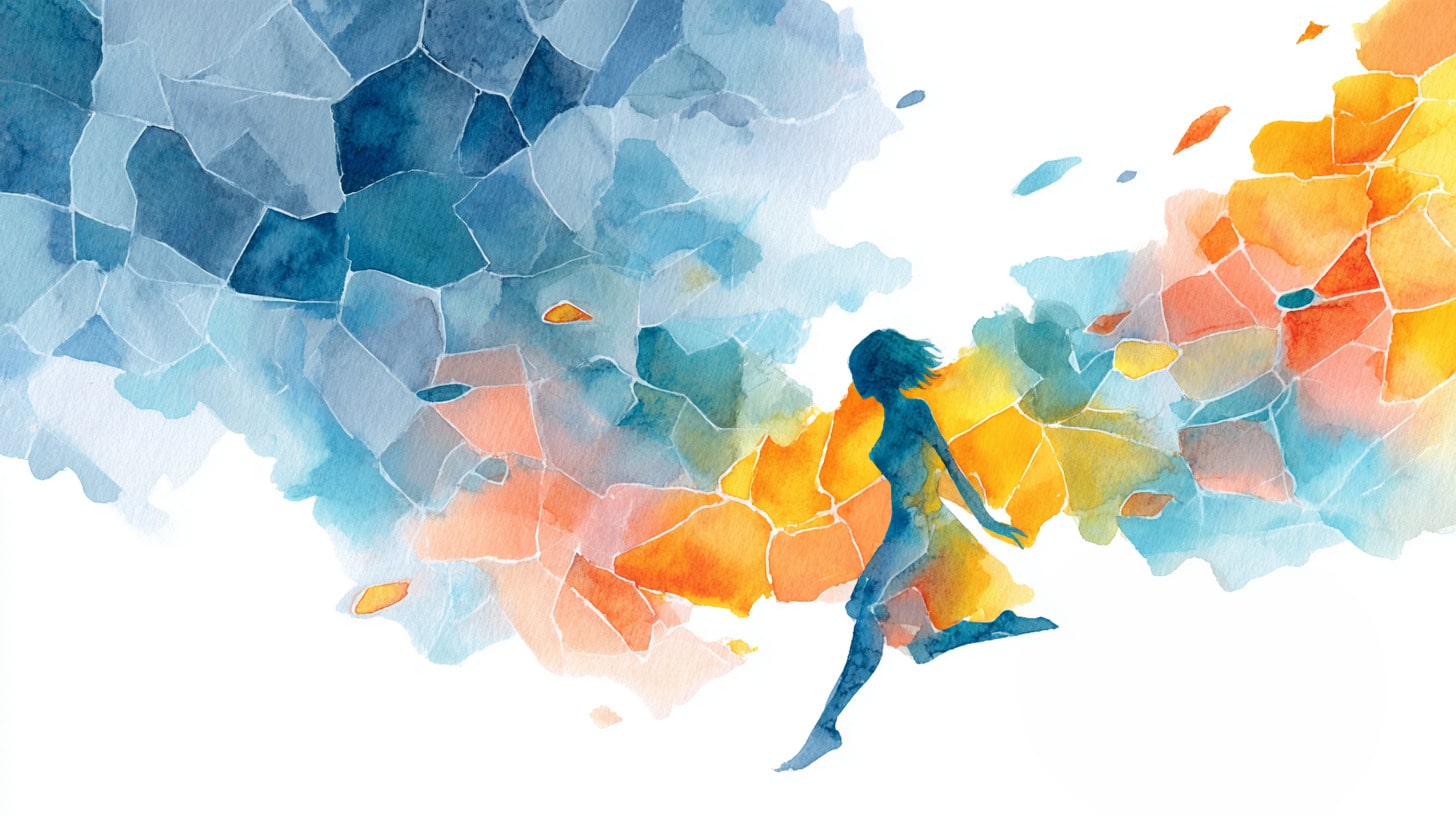
A shift is coming that will reach deeper than technology. Artificial intelligence is going to automate work at a scale we’ve never seen. That much is clear. But underneath the economic impact lies a deeper disruption; one that will reshape how we see ourselves. For most people, identity is inseparable from occupation. Ask someone to describe themselves, and their answer will usually begin with a job title. That’s not a coincidence. It's social conditioning. We’ve spent decades building a culture that ties self-worth to career status. This framework is about to break. When work becomes optional or unavailable, not just temporarily, but permanently, the psychological impact will be immense. For many, this will feel like disorientation. Psychologist James Marcia built on Erikson’s work by exploring identity formation in young adults. He described “identity foreclosure”, a state where someone adopts a role or identity without truly exploring who they are. In modern society, jobs often become that way. They offer structure, purpose, and social belonging without requiring much inner reflection. That convenience can be addictive. But when the structure is removed, so is the shortcut. People will be left with open space and no script. The traditional path of education, employment, retirement? Irrelevant. The corporate identity? Obsolete. What’s left is a kind of psychological nakedness that few have been prepared for. This is something we won't be able to fix with career coaching or resume upgrades. The tools we’ll need are internal, like self-inquiry, emotional regulation, meaning-making. We’ll have to learn to build identity from the inside out, rather than waiting for a role to define us. Some will lean into distraction. Others will double down on performance in whatever system still gives them status. But a growing number will feel the pull to go inward to separate their sense of value from the need to be useful in the traditional sense. That shift could open the door to something rare: a society where personal growth is a necessity. Not because it sounds inspiring, but because it becomes the only sustainable path forward. Work has given us structure, but it’s also narrowed our sense of self. When that structure falls away, there’s pain but there’s also a unique opportunity: to find out who we are when we’re not being measured. And from there, to build something more honest. More human.
Listen: Who Are You When the Work Stops?
Who Are You When the Work Stops?
Picks for you

The AI Race Is Not a Technology Race
The AI race is often framed as a competition of intelligence, models, and algorithms, but this essay argues that it is fundamentally an energy allocation problem hidden beneath a narrative of innovation. AI scales not like software but like heavy industry, consuming vast amounts of electricity and triggering political, social, and infrastructural constraints that code alone cannot solve. The real bottlenecks are not technical breakthroughs, but governance issues such as permitting, grid capacity, public consent, and price stability. In this context, energy geopolitics matter less for directly powering servers and more for creating political slack, cushioning public backlash, and making controversial reallocations of power socially tolerable. The true strategic challenge is not building smarter machines, but justifying why machines should receive scarce energy before people, and doing so without eroding trust or legitimacy. If the AI era succeeds, it will be because societies align energy, politics, and meaning through a story people can live inside; if it fails, it will be because that bargain is rejected.

2026 and the Return of the Whole Mind
As we move toward 2026, many of us are sensing a quiet imbalance. We think faster, consume more information, and rely heavily on analysis, yet feel less grounded, less certain, and more disconnected from ourselves. This essay argues that the problem is not thinking itself, but thinking in isolation. For decades, logic, efficiency, and control have been rewarded while intuition, emotion, imagination, and embodied knowing were sidelined. AI now exposes this imbalance by outperforming humans in pure analysis, making it clear that competing on cognition alone is a dead end. What remains distinctly human is the ability to sense context, notice subtle signals, integrate feeling with reason, and act with timing rather than urgency. Burnout, anxiety, and chronic overthinking are framed not as weaknesses but as signals of misalignment, where inner intelligence has been ignored too long. The future will favor integrated minds, people who can think clearly while also listening inwardly, adapting without panic, and making meaning from lived experience. The return of the whole mind is not nostalgia or softness, but a necessary evolution: a widening of intelligence that allows humans to partner with technology without losing themselves.

Why Immigration Feels More Dangerous Than It Statistically Is
Why Immigration Feels More Dangerous Than It Statistically Is explains how fear can grow even when reality stays relatively stable. Most of what we believe about crime and immigration does not come from direct experience but from repeated images, clips, and headlines designed to capture attention. The human brain uses a shortcut called the availability heuristic, it assumes that what comes to mind easily must be common. In a media environment where rare but extreme incidents are replayed endlessly, exposure replaces frequency, and repetition starts to feel like evidence. Immigration becomes a perfect container for this fear because it is complex, emotional, and easy to turn into a story with faces and villains. Long-term data often shows a calmer picture than our instincts suggest, but fear moves faster than context. The essay argues that critical thinking is not about dismissing fear, but about pausing inside it and asking whether our feelings reflect reality or visibility. When we hold that pause, understanding has room to return, and attention becomes a responsibility rather than a reflex.

Emotion as Navigation
Emotion as Navigation argues that emotions are not irrational reactions or inner verdicts, but feedback signals that indicate how our current reality relates to an underlying goal. We do not perceive the world neutrally and then feel about it; perception, emotion, and action form a single system oriented toward movement and adjustment. Positive emotions signal alignment, while negative emotions signal friction, misalignment, or outdated assumptions. Problems arise when we treat emotions as authority instead of information, or when the goals guiding our lives remain unexamined. Critical thinking does not suppress emotion, it interprets it by asking what aim the feeling is responding to and whether that aim still deserves commitment. When emotions are read as data rather than commands, they become a navigational compass rather than a source of confusion. A meaningful life, then, is not emotionally smooth but directionally coherent, guided by alignment rather than by the pursuit or avoidance of feelings themselves.

Thinking Under Pressure in the Age of AI
Thinking Under Pressure in the Age of AI argues that the real risk of AI is not incorrect answers, but how its speed, clarity, and confidence interact with human cognitive biases. Our minds rely on shortcuts designed for efficiency, and AI amplifies these shortcuts by making information feel complete, authoritative, and easy to trust. Biases shape what we notice, how we judge probability, how we commit to decisions, and how emotion quietly leads reasoning, often without awareness. Critical thinking today does not mean rejecting AI or eliminating bias, but slowing down enough to recognize when judgment is being bent by familiarity, confidence, framing, or emotional ease. As AI accelerates information flow, human responsibility shifts toward interpretation, verification, and self-awareness. When we notice our own thinking habits, AI remains a tool; when we do not, it quietly becomes the driver.

Good, Bad, and the Direction of Attention
Good, Bad, and the Direction of Attention argues that we do not experience the world as inherently good or bad, but as helpful or obstructive relative to an often unexamined aim. Our attention, emotions, and moral judgments are shaped by the direction we are moving in, not by neutral facts. What accelerates our path feels “good,” what slows it feels “bad,” even though neither quality exists on its own. This is why people can react morally in opposite ways to the same event, they are oriented toward different goals. The danger arises when the aim itself remains invisible, because alignment then masquerades as virtue and resistance as evil. Critical thinking begins by asking what aim is generating a reaction, not by defending the reaction itself. When we examine direction before judgment, we regain freedom to question whether speed equals progress, whether friction equals harm, and whether what feels urgent actually leads somewhere meaningful.

What If We Are Living in a Simulation?
What If We Are Living in a Simulation? treats simulation theory not as sci-fi speculation but as a lens for understanding why the world looks the way it does. Simulations exist to explore unknown outcomes, not to preserve harmony, and when viewed this way, suffering, chaos, and instability stop looking like errors and start looking like data. Human history, with its late arrival, layered complexity, religions, governments, markets, and now AI, resembles a staged experiment where new parameters are introduced to increase unpredictability. Meaning, in this frame, does not disappear, it intensifies. If outcomes are uncertain, then choices matter more, not less. Whether the universe is simulated or not, we already live inside conditions where agency, values, and response shape trajectories. We are not spectators waiting for answers, but variables whose actions feed the system itself. The unfinished nature of reality is not proof of meaninglessness, but evidence that participation is the point, and that how we act under uncertainty is the real test.