
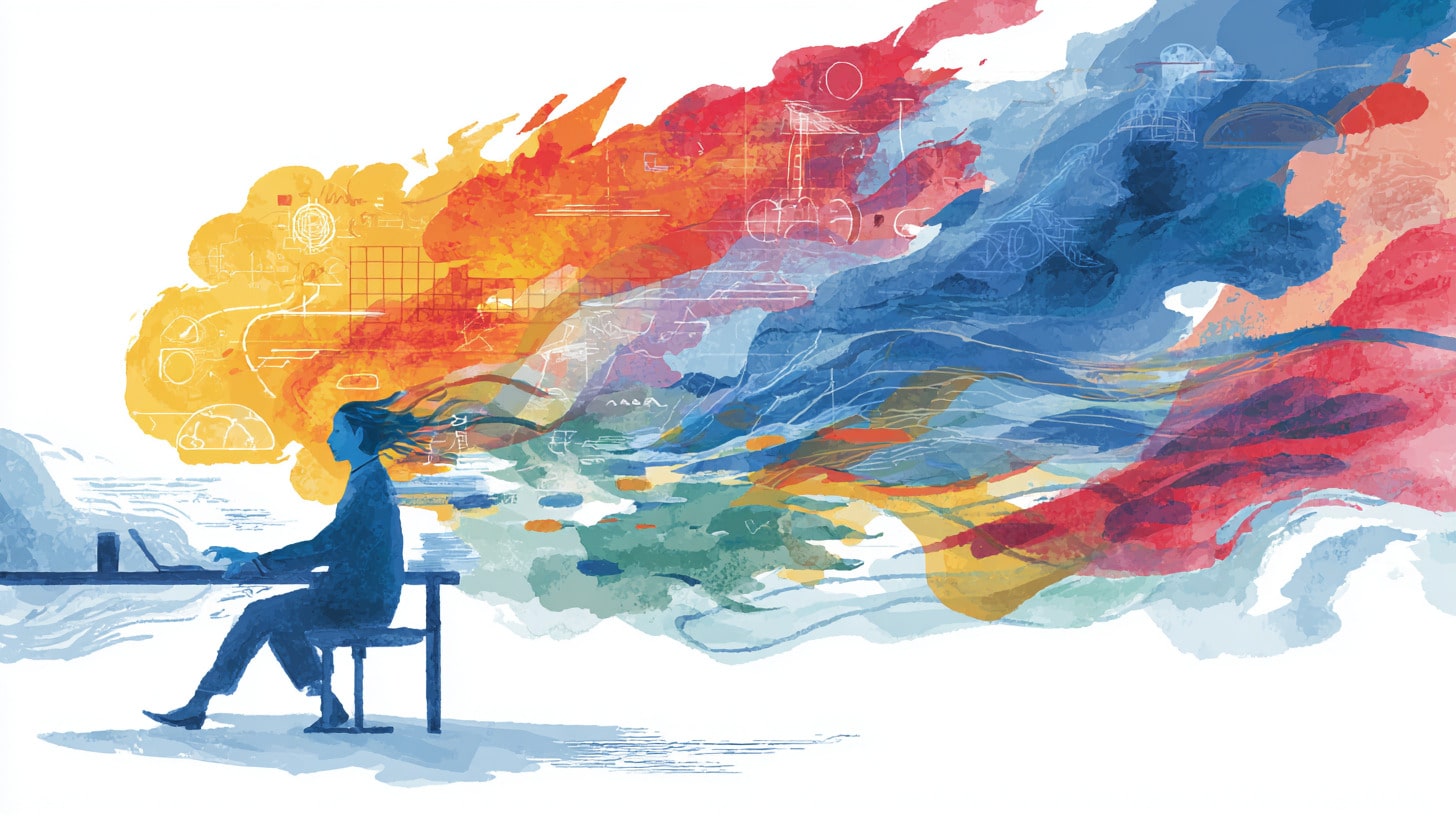

The Speed of Information vs The Speed of Reflection
We are thinking more than ever, yet questioning less. AI answers quickly. It speaks clearly. It sounds confident. That combination feels comforting.
Over time, it trains us to accept information faster than we reflect on it. The danger is not that AI makes mistakes. The danger is that our mind stops noticing its own habits.
Human thinking is full of shortcuts. These shortcuts are called cognitive biases. They are not signs of low intelligence. They are signs of efficiency. The brain prefers speed over precision. In the age of AI, this preference becomes more visible.
AI does not remove bias. It interacts with it. Sometimes it magnifies it.
Critical thinking today means recognizing where our judgment bends without us noticing. The goal is not to eliminate bias. That is impossible. The goal is to slow down just enough to see it working.
Below are the main clusters of cognitive biases that shape how we think, judge, and decide in an AI-driven world.
Information and Attention Biases
These biases control what we notice and what we ignore. They act before reasoning starts.
Availability Heuristic
Our brains often judge how likely something is based on how easily we can remember an example of it. In the world of technology, a single viral video of an AI failure can make us feel like all AI systems are dangerous, even if the statistics suggest otherwise.
WYSIATI (What You See Is All There Is)
This is the tendency to make a final decision using only the information right in front of us. We see one impressive demo of a chatbot and immediately decide it is capable of anything, forgetting about the vast amount of data and limitations we cannot see.
Cognitive Ease vs Strain
We naturally trust information that feels easy to read or hear. Because AI often gives us simple, polished explanations, we tend to believe they are more accurate than a complex, messy truth that requires more effort to understand.
Base Rate Neglect
We often ignore general facts and numbers in favor of a specific, vivid story. Even if we know that AI has a high error rate for a certain task, we might ignore those statistics because we heard one amazing success story from a friend.
Law of Small Numbers
This is the belief that a very small amount of data can tell us the whole story. We might test an AI with only five questions, and because it gets them right, we wrongly assume it will be perfect for every person in every situation.
Judgment and Probability Errors
These biases distort how we reason about likelihood and truth.
Representativeness Heuristic
We tend to judge things based on how much they look like our "typical" idea of something. If an AI sounds human and uses polite language, we often assume it possesses human-like understanding, even though it is just processing code.
Conjunction Fallacy
We often believe that a very specific scenario is more likely than a general one. For instance, we might think it is more likely that an AI is "both creative and accurate" than just "accurate," simply because the specific description paints a more interesting picture in our minds.
Regression to the Mean
Events that are extreme usually settle back toward the average over time. When an AI produces one truly exceptional, "genius" result, we treat it as the new standard, only to be disappointed when its next ten results return to its usual average quality.
Illusion of Validity
This is when we feel very confident in our judgment even when the evidence is weak. Because AI uses such confident and authoritative language, we often trust its answers without ever actually checking if the facts are true.
Decision and Commitment Biases
These biases affect how we stick to choices once made.
Anchoring Bias
The first piece of information we receive often acts as an "anchor," and we judge everything else relative to it. When we ask AI a question, that very first answer becomes our point of comparison, making it harder to consider better ideas that come later.
Sunk Cost Fallacy
We tend to keep going with a losing plan because of the time or money we have already spent. Someone might continue using a frustrating or inaccurate AI tool simply because they spent three weeks learning how to use it, rather than switching to something better.
Planning Fallacy
Humans are notoriously bad at guessing how much time a task will take. We often assume that installing or using AI will be a "quick fix" that saves time instantly, while ignoring the hours of setup and troubleshooting that usually follow.
Outcome Bias
We often judge whether a decision was good based only on the final result, rather than the logic used at the time. If someone uses AI to make a risky medical or financial choice and it happens to work out once, we praise the "smart" use of AI while ignoring the fact that it was actually a dangerous gamble.
Endowment Effect
We value things more simply because they belong to us. You might believe your own "custom" AI prompts are the most effective ones available, even when a standard prompt from a colleague produces much better results.
Emotion and Affect Biases
These biases let feelings decide before thinking does.
Affect Heuristic
Our emotions often act as a shortcut for judging risks and benefits. If we see a scary headline about robots, that underlying fear can make us view every new AI feature as a threat before we even try it.
Mood Effects
The way we feel in the moment changes how we see technology. If we are having a stressful day, an AI's minor mistake feels like a total system failure; if we are in a great mood, we might overlook a serious error.
Loss Aversion
To the human brain, the pain of losing something is twice as strong as the joy of gaining something. This is why the fear of AI taking away jobs often feels much more powerful than the potential benefits of AI making our work easier.
Halo Effect
If we like one thing about a person or a product, we assume everything else about it is great too. Because an AI has a beautiful, clean interface and a friendly "personality," we subconsciously assume that the data it provides must be high-quality.
Framing Effect
The way a choice is described changes how we feel about it. We are much more likely to trust a tool if it is called an "AI Assistant" than if it is called an "Automated Decision Maker," even if the software does exactly the same thing.
Self-Perception and Confidence Biases
These biases distort how we judge ourselves and our knowledge.
Overconfidence Bias
We often think we are more accurate than we actually are. This leads many people to believe they can spot an AI mistake just by looking at it, which causes them to stop double-checking the output against reliable sources.
Hindsight Bias
After something happens, we tend to believe we knew it was going to happen all along. Once an AI company succeeds or fails, people often say the outcome was "obvious," even though they couldn't have predicted it a year earlier.
Disposition Effect
This is the tendency to get rid of things that are working well while holding onto things that are failing. In the tech world, people might stop using a simple, reliable AI tool because it feels "boring," while spending months trying to fix a complex tool that never quite works.
Experience and Evaluation Biases
These biases affect how we remember and evaluate experiences.
Peak-End Rule
We don't remember an entire experience equally; we mostly remember the most intense moment and how it ended. If an AI tool was helpful for an hour but crashed at the very last second, we will likely remember the whole experience as a failure.
Duration Neglect
We often ignore how long an experience lasted when we look back on it. We might rave about how fast an AI wrote a paragraph, completely forgetting the three hours we spent correcting the errors it made within that paragraph.
Intuition vs Algorithm
Sometimes we trust our "gut feeling" even when data proves us wrong. A person might ignore a highly accurate AI weather or financial model because their "instinct" tells them something else, even if their instinct has a history of being wrong.
Substitution
When faced with a difficult question, our brain often swaps it for an easier one without us noticing. Instead of answering the hard question, "Is this AI model technically reliable?", we often answer the easier question, "Do I like the way this AI talks to me?"
Staying Awake in an AI-Driven World
AI changes how fast information moves, not how the human mind works. Biases were here before algorithms and they will remain after. What changes is the scale. Errors spread faster. Confidence feels stronger. Correction feels slower.
Critical thinking today is not about rejecting AI. It is about staying awake while using it. Awareness is the first step. Once you recognize these patterns in yourself, AI becomes a tool instead of a driver.
Thinking clearly is still a human responsibility.


