The Moment Reality Slipped
There is a specific kind of discomfort many people feel today, even if they cannot name it.
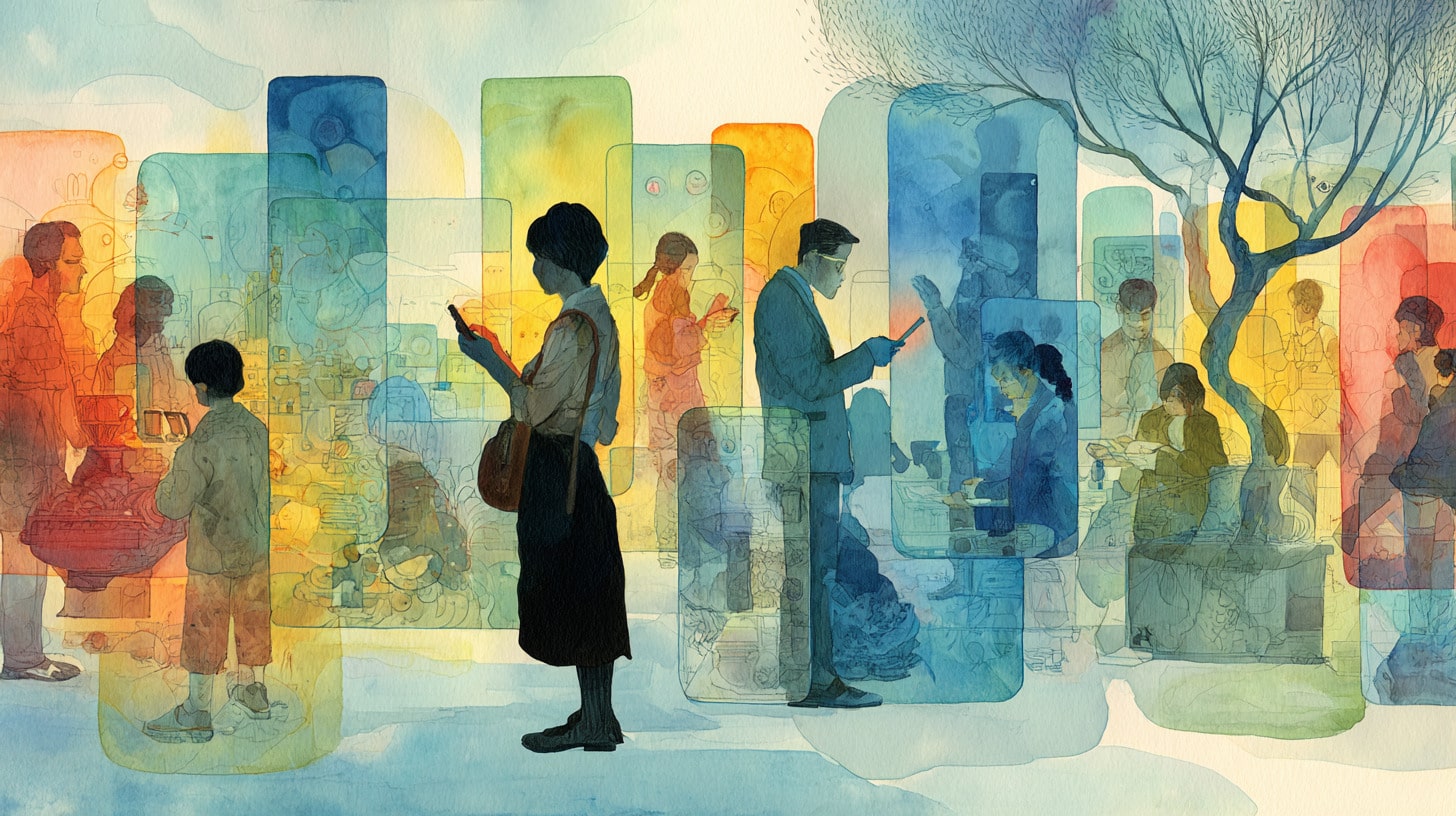
You wake up informed. You scroll through news, ideas, opinions, facts. You know what is happening in the world within minutes of it happening. And yet, something feels strangely absent.
Meaning does not keep up with information.
Reality feels distant, flattened, almost staged.
This feeling is not accidental. Jean Baudrillard named it decades ago in his book Simulacra and Simulation. His argument is not that we live in a fake world. It is more unsettling than that.
We live in a world where reality has been replaced by simulation.
And most of us did not notice when the replacement happened.
The Book That Predicted the Blur
In Simulacra and Simulation, Baudrillard describes a shift in how humans experience the world.
Once, we lived among things.
Now, we live among signs.
A sign is something that stands in for something else. A photo stands in for a moment. A logo stands in for a product. A profile stands in for a person.
At first, signs helped us describe reality.
Then they started shaping it.
Now, in many cases, they have replaced it.
Baudrillard’s key idea is simple but brutal: we are no longer dealing with reality itself. We are dealing with simulations of reality. And those simulations no longer point back to anything real.
They point to each other.
From Representation to Simulation
In the past, a photograph captured a moment that happened whether or not the camera was there.
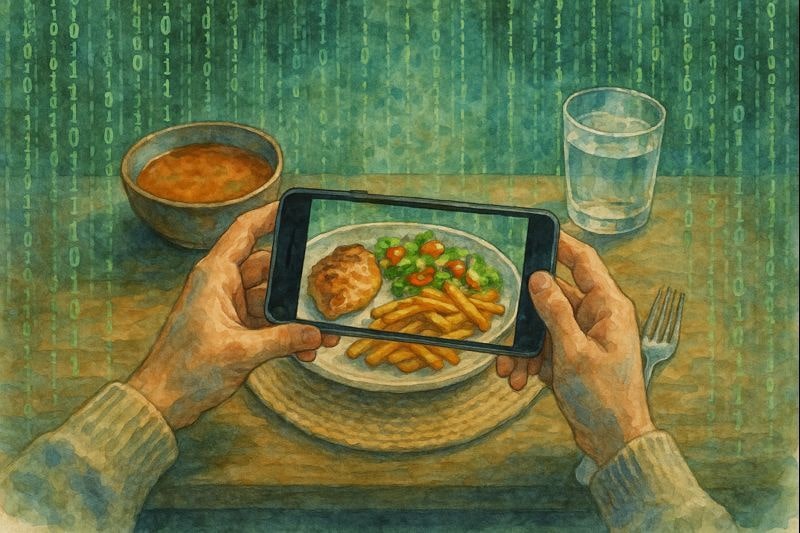
Today, many moments exist because the camera is there.
Photos are staged, filtered, optimized. Some are generated without a moment ever happening at all.
The image does not document reality. It designs an expectation of what reality should look like.
Over time, that expectation becomes stronger than experience itself.
You start measuring life against images, not against how it feels to be alive.
This is where simulation begins.
More Information, Less Meaning
Baudrillard famously wrote that we live in a world with more and more information and less and less meaning.
This line feels almost physical now.
Your mind absorbs updates constantly. Facts collide with opinions. Knowledge arrives faster than reflection.
Nothing settles.
Meaning requires time. Simulation removes time.
Everything becomes immediate, interchangeable, scrollable.
When everything is presented with the same urgency, nothing feels truly important.
The result is not ignorance. It is saturation.
Simulacra: Copies Without Originals
Baudrillard uses the word simulacra to describe a specific kind of copy.
Not a fake.
A copy that no longer has an original.
An emoji of a king does not refer to a real monarch. It refers to an idea shaped by other symbols. A princess in a child’s drawing is rarely inspired by a real person. It comes from animated simulations that replaced any historical reference.
The symbol floats free.
This is the heart of simulation. Signs stop pointing outward. They begin circulating among themselves.
Reality becomes optional.
The Four Levels of Simulation
Baudrillard describes four stages through which representations pass:
- Faithful copy — a clear reflection of something real.
- Distorted copy — reality is edited, enhanced, cleaned up.
- Mask — the image hides the fact that reality is missing.
- Pure simulation — the image has no relation to reality at all; it exists on its own.
At the fourth stage, the line disappears.
You cannot tell where reality ends and simulation begins.
When Observation Changes the Real
One of the most unsettling ideas in the book is how being observed transforms what is observed.
When people know they are being watched, they perform.
Culture turns into a performance of itself.
Rituals become exaggerated. Traditions become staged. Identity becomes something to present, not something to live.
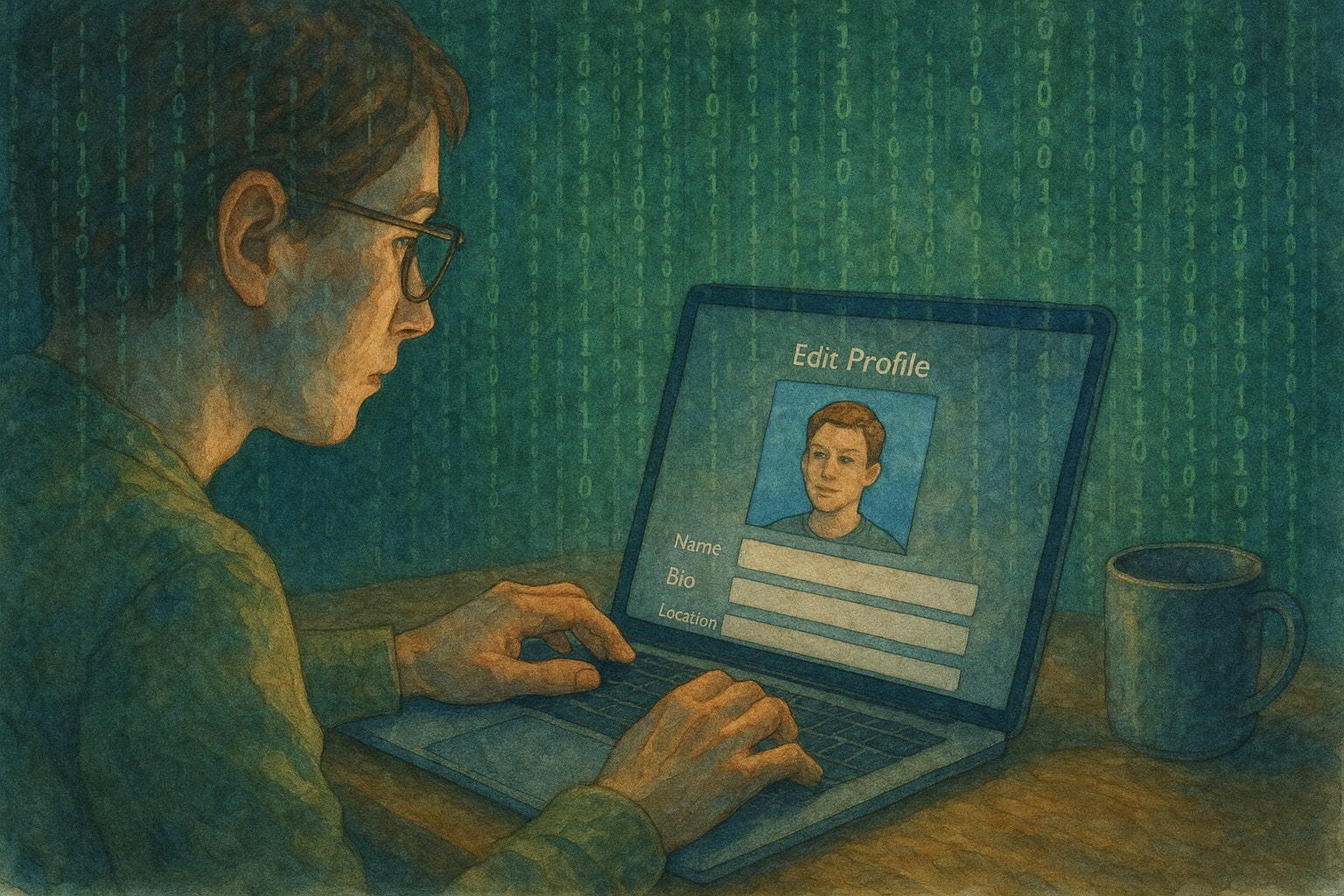
Eventually, people begin learning who they are by looking at representations of themselves — academic texts, media portrayals, online profiles.
The simulation feeds back into the original.
The copy becomes the teacher.
Hyperreality: When Feeling Real Is Enough
Baudrillard uses the term hyperreality to describe a world where simulation feels more real than reality.
In a hyperreal world, a war and a dance video exist in the same format. Both are content. Both compete for attention. Both are consumed emotionally and then replaced by the next thing.
Meaning is flattened.
Memory is shaped by clips and headlines rather than lived experience.
If your understanding of an event comes entirely from media, the event itself becomes secondary.
What matters is how real it feels, not whether it is real.
Spaces Built from Simulation
Baudrillard points to physical spaces to explain this idea.
A hypermarket is not just a store. It is a total environment. Everything is uniform, clean, idealized. Produce looks perfect. Nature is corrected.
Later, when you encounter real vegetables with dirt and irregular shapes, they feel wrong.
Not because they are unnatural.
But because simulation trained your expectations.
Theme parks work similarly. They exaggerate fantasy so openly that they appear honest. In doing so, they make the outside world seem real by comparison.
Baudrillard’s point is sharper:
The outside world is also staged. It just pretends not to be.
Brands, Politics, and Desire
In a simulated world, symbols replace substance.
Brands stop representing products and start representing identities. You do not buy objects. You buy meaning, belonging, lifestyle.
Politics follows the same logic. The image of a candidate matters more than their beliefs or abilities. Performance beats depth.
Simulation wins because it is smooth.
Complex reality is difficult. Simulation is easy to consume.
Addiction to Simulation
Simulation does not only surround us. It rewards us.
Our nervous system adapts quickly to symbols. Likes arrive faster than gratitude. Images move faster than relationships.
Dopamine becomes tied to screens instead of experiences.
Over time, real life feels slow. Unpolished. Demanding.
Simulation feels efficient.
This is how addiction forms. Not because simulation is evil, but because it is optimized.
Is There Anything Outside the Simulation?
Baudrillard does not offer a clean escape.
There is no full return to a pure, untouched reality.
But this does not mean everything is lost.
Reality still appears in small moments.
Moments without an audience.
- A genuine smile from a stranger.
- Art made without strategy.
- Silence without productivity.
These moments feel different in the body.
They do not ask to be shared.
Nature and the Final Illusion
One of the deepest illusions of simulation is the idea that humans are separate from nature.
Simulation convinces you that nature is somewhere else. A place you visit. A background you consume.
But you are nature.
Forests do not represent. Rivers do not perform. They simply exist.
Being with them dissolves simulation, not because they are pure, but because they do not pretend.
Living Inside the Simulation With Awareness
The point is not to reject the world.
The point is to see it clearly.
To know that many things around you are simulations. To notice what pulls you away from yourself.
Clothing can be simulation. Ego can be simulation. Certainty can be simulation.
The louder and more confident something sounds, the more carefully it deserves attention.
Including your own beliefs.
A Slower Ending
Maybe the most radical act today is not rebellion.
It is slowness.
Unplugging without announcing it.
Experiencing without documenting it.
Living without translating life into symbols.
Because the danger is not that we live inside a simulation.
The danger is forgetting that we do.


