
There is a quiet truth most of us feel but rarely say out loud.
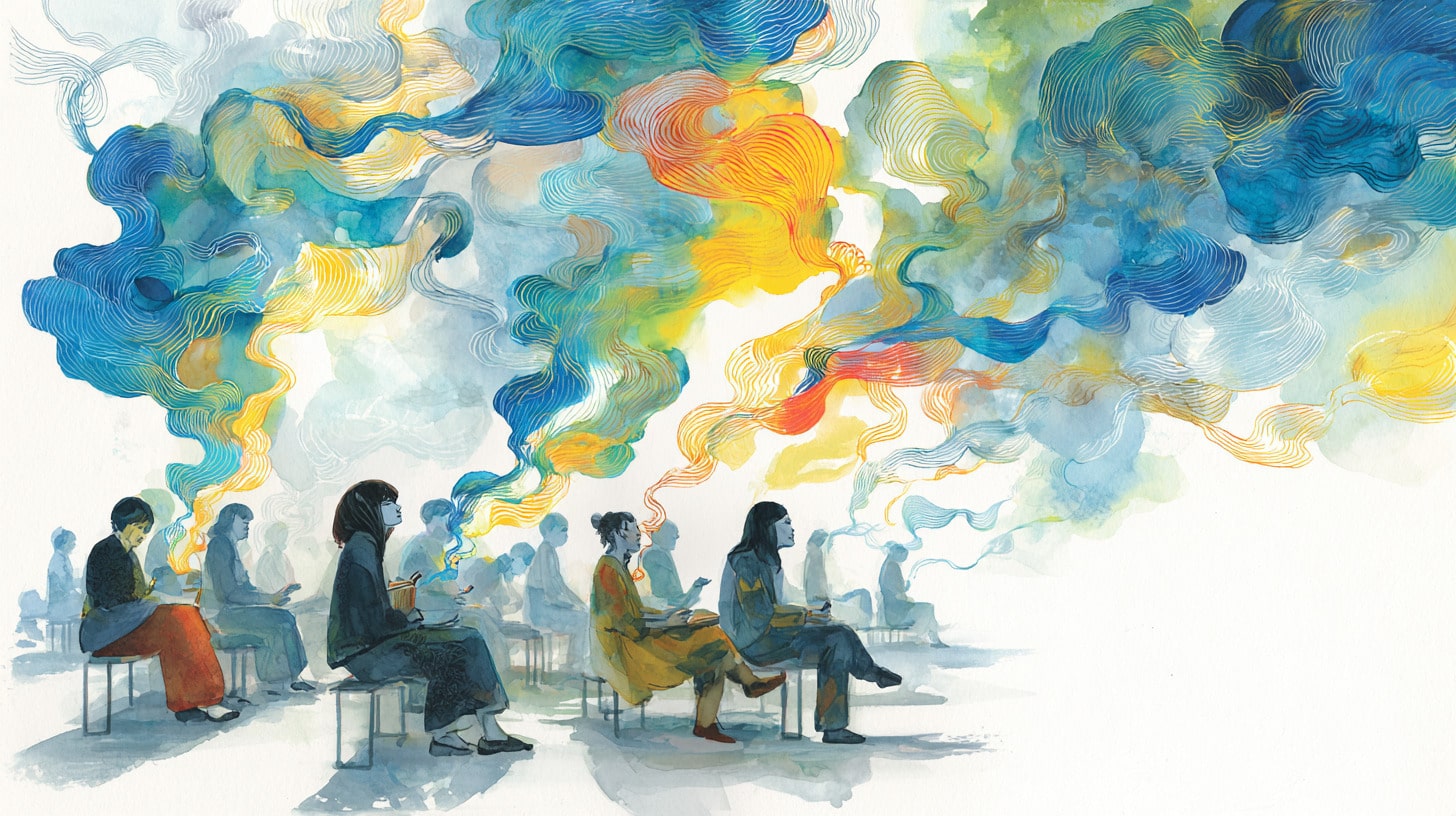
We live in a time where loneliness sits closer to us than our own shadow. It walks with us from the moment we open our eyes to the moment we collapse into the night. Some days it is small. Other days it fills the entire room. And because we do not know how to sit with it, we try to outrun it by reaching for whatever numbs the feeling fastest.
Every era has its addictions. Ours simply look different.
- Not bottles.
- Not cigarettes.
- Not casinos.
The addictions of this generation glow.
They vibrate.
They scroll.
They whisper our name through tiny red dots and infinite feeds.
Stay here a little longer. You will feel better soon.
But the promise never becomes reality. It only becomes repetition.
What we are addicted to is not the device.
It is the feeling of escaping ourselves for a moment.
And the reason we need the escape is simple:
We feel alone, even while surrounded by the entire world.
This loneliness is not caused by technology. It is amplified by it.
AI, social media, and algorithmic platforms did not invent our emotional holes. They only learned how to enter them with surgical precision. They learned what makes us pause, what makes us doubt, what makes us crave, and what makes us whisper “just one more minute.”
These systems:
- persuade without speaking.
- guide without instructing.
- shape us without asking for permission.
And because they operate at speeds and scales our nervous systems were not built to handle, our minds try to cope the only way they know how:
by developing new addictions for a new age.
This is the addiction of:
- endless checking.
- constant comparison.
- manufactured urgency.
- false connection.
- digital distraction.
- chasing identity in the eyes of strangers.
These addictions do not destroy dramatically. They destroy quietly.
They do not break lives. They dilute lives.
They turn deep desires into shallow habits.
They replace inner clarity with outer noise.
They erode our capacity for attention, imagination, and honest connection.
They make us forget what it feels like to be fully present inside our own life.
And because the damage is subtle, we mistake it for normal.
- We call it “being connected.”
- We call it “staying informed.”
- We call it “keeping up.”
- We call it “just how things are now.”
But deep inside, we know something is wrong.
The signs are everywhere.
- We have more friends than ever, yet fewer people we truly trust.
- We have more content than ever, yet fewer ideas we genuinely believe.
- We have more tools for creativity, yet less courage to express what we think.
- We have more access to each other, yet less intimacy.
- We have more inspiration, yet more numbness.
- We have more distraction, yet less meaning.
We are overstimulated and undernourished at the same time.
This is why the addictions of our era are so powerful.
They do not numb pain.
They numb absence.
- Absence of belonging.
- Absence of meaning.
- Absence of stillness.
- Absence of direction.
- Absence of feeling seen.
- Absence of feeling grounded in who we are and what we want.
When a person feels this kind of absence long enough, they reach for whatever gives a sense of soothing. And in a hyperconnected world, soothing is offered everywhere.
- Scrolling becomes medication.
- Notifications become conversation.
- Influencers become companions.
- AI becomes the listener we didn’t have.
- The feed becomes a map we follow without knowing why.
We keep returning to the same digital rituals, not because they give joy, but because they give relief. And relief is enough when meaning feels far away.
But here is the deeper truth we often overlook:
What we call addiction is often a search for connection in disguise.
- We look for affirmation because we feel unseen.
- We look for distraction because we fear our own thoughts.
- We look for stimulation because silence feels threatening.
- We look for digital worlds because our own world feels too small.
- We look for instant answers because sitting with uncertainty feels too heavy.
- We look for constant noise because quiet reminds us of our loneliness.
None of this makes us weak.
It makes us human.
Every addiction is an attempt to soothe a deeper emotional need.
Every impulse has a story.
Every craving holds a message.
Our modern addictions are not signs of failure.
They are signals that we are living in an environment our psychology was not designed for.
The friction between ancient emotional needs and modern technological forces creates a kind of spiritual fatigue. We feel stretched in directions we never asked for. We feel pulled into lives we never consciously chose. We lose the sensation of being rooted. We forget what the inside of our mind feels like without interruption.
And the more disconnected we become, the more addictive the escape feels.
But there is something hopeful underneath all of this.
Our addictions reveal what matters most.
- They show our desire for connection.
- They show our need for belonging.
- They show our hunger for meaning.
- They show our wish for clarity.
- They show our longing to be fully alive.
This means the solution is not to delete technology.
The solution is to rebuild the relationship between our inner world and the outer world that surrounds us.
We need the discipline of attention.
We need the courage of self-honesty.
We need the strength to question our impulses.
We need the awareness to notice when we are escaping instead of engaging.
We need spaces where meaning grows, not just information.
We need conversations that nourish instead of drain.
We need a community that reminds us we do not have to face the world alone.
We need to choose our inputs with the same intention we choose our food.
What we feed our mind becomes the architecture of our thoughts.
What we repeatedly watch becomes the lens through which we see ourselves.
What we give attention to becomes the gravity that shapes our life.
Without mindful input, addiction fills the emptiness.
With mindful input, imagination fills it instead.
This is the exact moment in history where imagination becomes a form of healing.
It gives us a way back to ourselves.
It reconnects us with our inner voice.
It rebuilds the inner landscape that modern life keeps dissolving.
It reminds us that our minds are not passive screens but creative engines.
It turns us from consumers of meaning into creators of meaning.
And when imagination comes back, something else returns with it:
self-trust.
Because when you can imagine a different version of yourself, you stop being controlled by the version that the world tries to assign to you.
This is why meaning matters now more than ever.
Meaning is not a luxury. It is a stabilizer.
Meaning gives us orientation in a world that does not stop moving.
It gives us identity in a world that tries to define us.
It gives us grounding in an environment built to pull us apart.
Addiction thrives in emptiness.
Meaning thrives in intention.
When intention grows, addiction loses its power.
The goal is not to eliminate every addictive impulse from our lives.
The goal is to reclaim authorship over our attention, our identity, and our emotional reality.
The goal is to build a life where our technology becomes a tool instead of a refuge.
The goal is to remember that we are not fragile users being manipulated by algorithms.
We are minds capable of reflection, aware of our choices, and responsible for our direction.
And the journey back begins with a simple shift:
notice the moments you reach for escape, and ask what you were feeling one second before your finger touched the screen.
Not to judge.
To understand.
Because understanding yourself dissolves the power of any addiction.
We are living through an era where the world is overwhelming by default.
That makes intentional living an act of self-defense.
It makes reflection a source of strength.
It makes clarity a survival skill.
It makes meaning a necessity, not an accessory.
This is the path forward.
Not a purge.
Not a detox.
Not a temporary break.
A return.
- A return to your own inner voice.
- A return to your own values.
- A return to the version of yourself untouched by the influence of endless feeds.
- A return to the human parts of you that cannot be automated, templated, or optimized.
Because behind every modern addiction is a simple truth:
we long for something real.
And real meaning never comes from escape.
It comes from presence.
It comes from intention.
It comes from choosing what deserves your attention every day.
It comes from building a mind that does not need to run away to feel alive.
It comes from filling the space inside you with something stronger than loneliness.
Our addictions are not the enemy.
They are reminders.
Reminders that something deeper is calling for our attention.
Reminders that our inner life needs nourishment.
Reminders that we cannot live on distraction alone.
And when we listen to those reminders, we begin the work that every generation must do in its own way:
to take back our mind from the forces that try to shape it,
and to rebuild a life where meaning is not something we look for in the world,
but something we create from within.


