
Skip to content
Blogstorytelling
The Muscle We — Too Frequently — Forget We Have
9
B
Bob Wollheim

Listen: The Muscle We Forget We Have

0:000:00

The Muscle We Forget We Have

The Question That Started It All

I kept wondering… What should my kid, Nico, really be learning in this AI era?

And strangely enough (or not), my answer had nothing to do with coding. Or mastering the latest tools. Or writing perfect prompts. It kept circling back to the human side of things — creativity, empathy, ethics, imagination, collaboration. The stuff that doesn't show up in most school curriculums. The things that actually make us… well, us.

And honestly? I wasn't seeing those things out there in a meaningful, embodied way.

So I opened myself to a self-invitation: to create something.

To be honest, it started with nothing. Just a thought that wouldn't leave me alone, a single slide I threw together, and a name a friend tossed out one day — AI Lemonade Stand. That's how the camp was born.

A place where kids learn about AI through a human-centered lens. Not slides. Not classrooms. Just sun, sand, pencils, a couple of iPads… and room to explore.

What the Kids Taught Me

This past summer, I watched something I won't forget.

Some kids initially outsourced their imagination to AI. They asked it to generate ideas for them. The results? Flat. Generic. Forgettable. The AI did exactly what they told it to do — and that was the problem.

But then, they acted differently and sparked their own imagination first. They brought weird ideas, personal stories, half-formed hunches — and then used AI to amplify them.

The kids went places none of us expected.

For them, AI became a collaborator, not a crutch. It took their raw creative energy and helped them build something real.

And that's when it hit me…

AI doesn't replace imagination. It reveals whether you have any. And it also reveals when you don't.
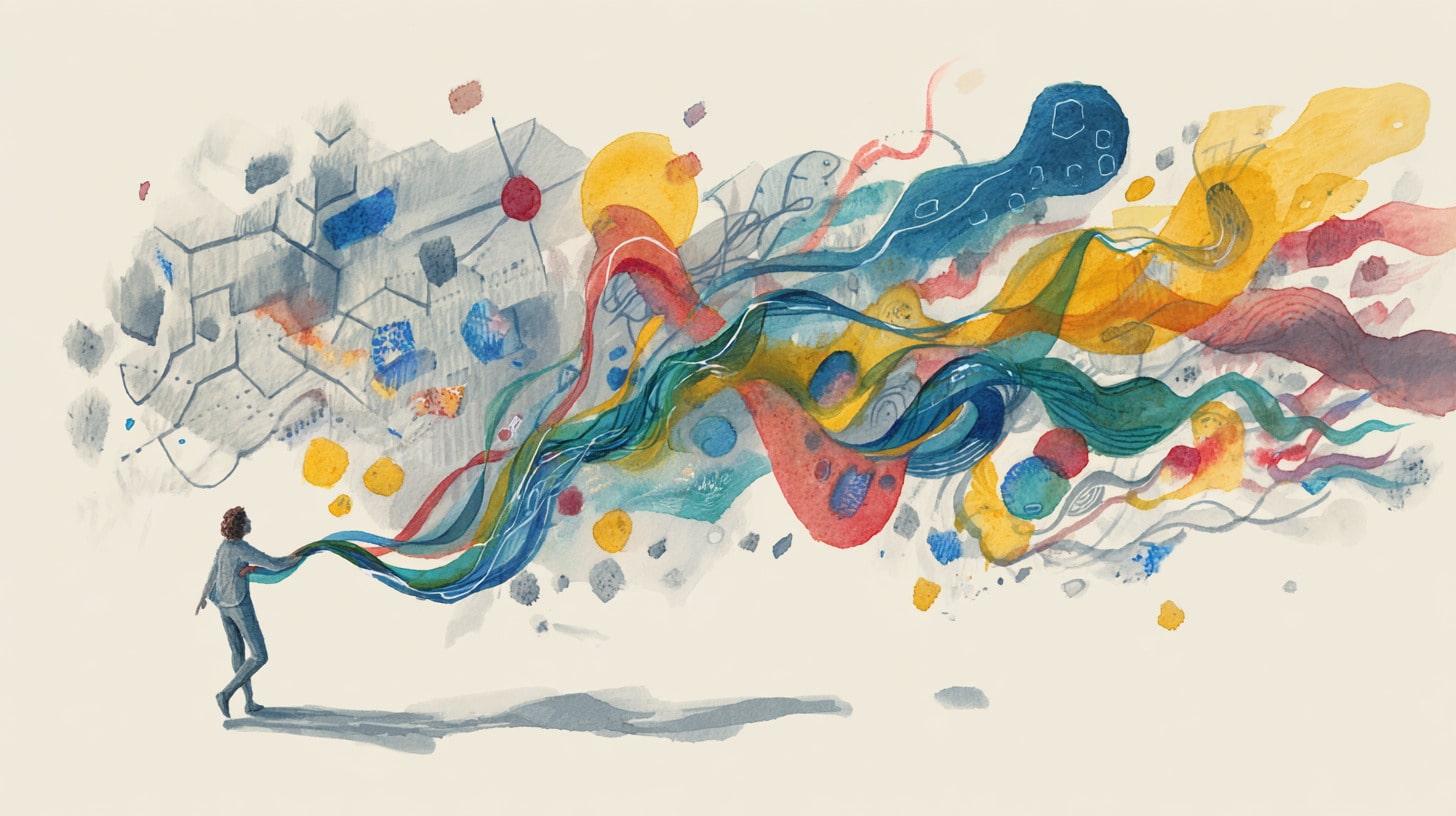
Kids collaborating at AI Lemonade Stand, using imagination first and technology second

Imagination is not outsourced; it's amplified. When kids led with their own ideas, AI became a tool instead of a replacement.

The World That Boxed Us In

And honestly? This is the part that bothers me.

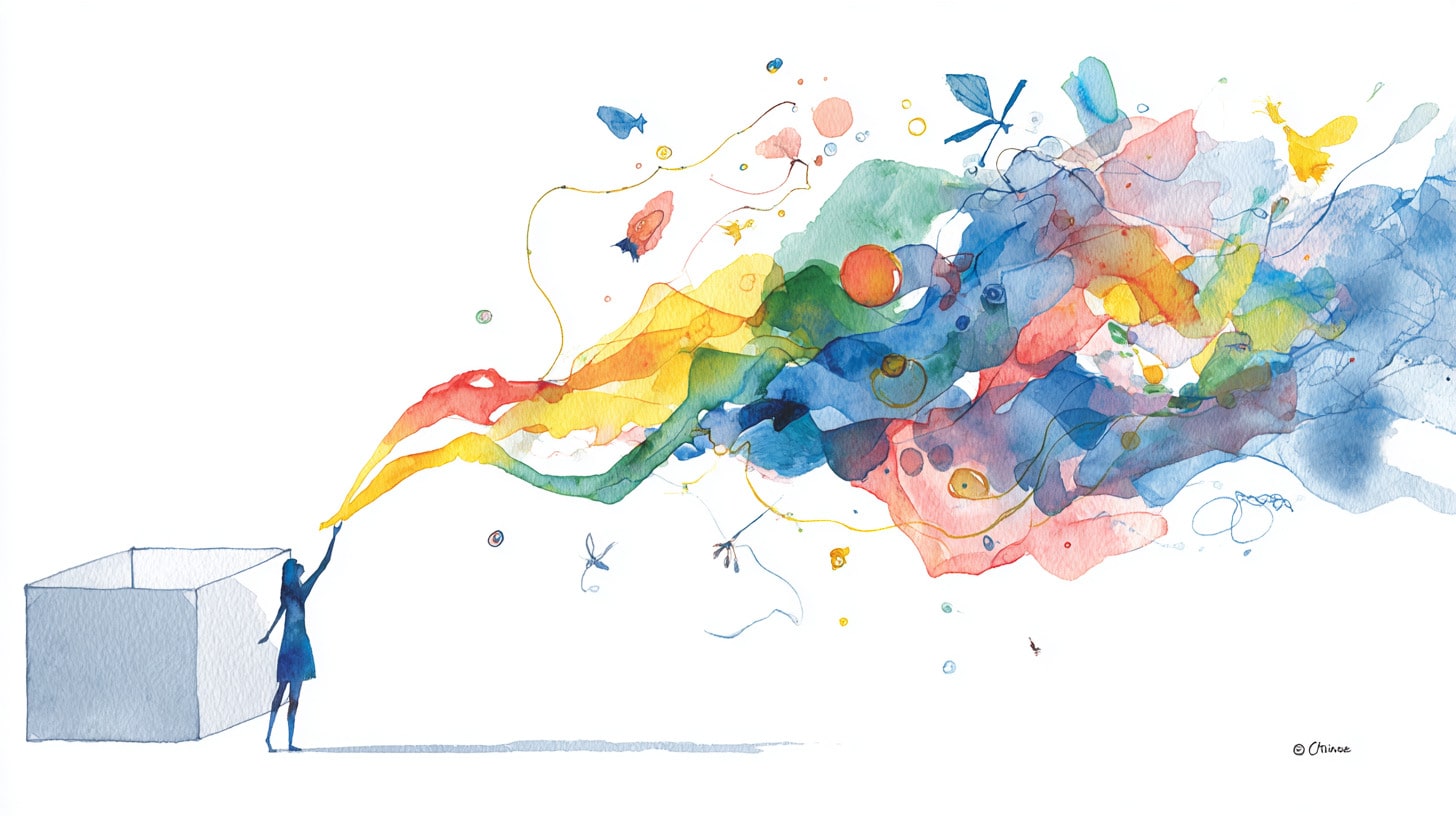
Most of us have spent decades being trained out of our imagination. Education rewards right answers, not interesting questions. Companies promote people who colored inside the lines. Parents — with the best intentions — steer us toward safe, predictable paths.

There's an entire system designed to make us less creative, more compliant, more comfortable inside the boundaries. For a long time, it worked. Imagination was inefficient. Creativity was risky.

But that world is ending. Fast.

And here's the uncomfortable part we don't like to admit: most adults are using AI the exact way they were trained to think — to move faster, produce more, and avoid uncertainty. We're not asking better questions; we're asking for safer answers. We're optimizing the box instead of questioning why we're still inside it.

And then we act surprised when the output feels empty.

AI isn't flattening our thinking — it's exposing how flat we've allowed it to become.

Imagination Is a Muscle

Here's what I've realized: imagination isn't a gift some people have. It's a muscle.

If you've spent years avoiding new ideas — because they felt risky, because you might be rejected, because "that's not how we do things" — you've gotten very good at staying in the box. The muscle didn't disappear because you lack talent. It atrophied because you stopped using it.

The reverse is also true. The more you're pushed to generate ideas, the more ideas you generate. The more you're incentivized to create, the more creative you become. Imagination feeds on itself.
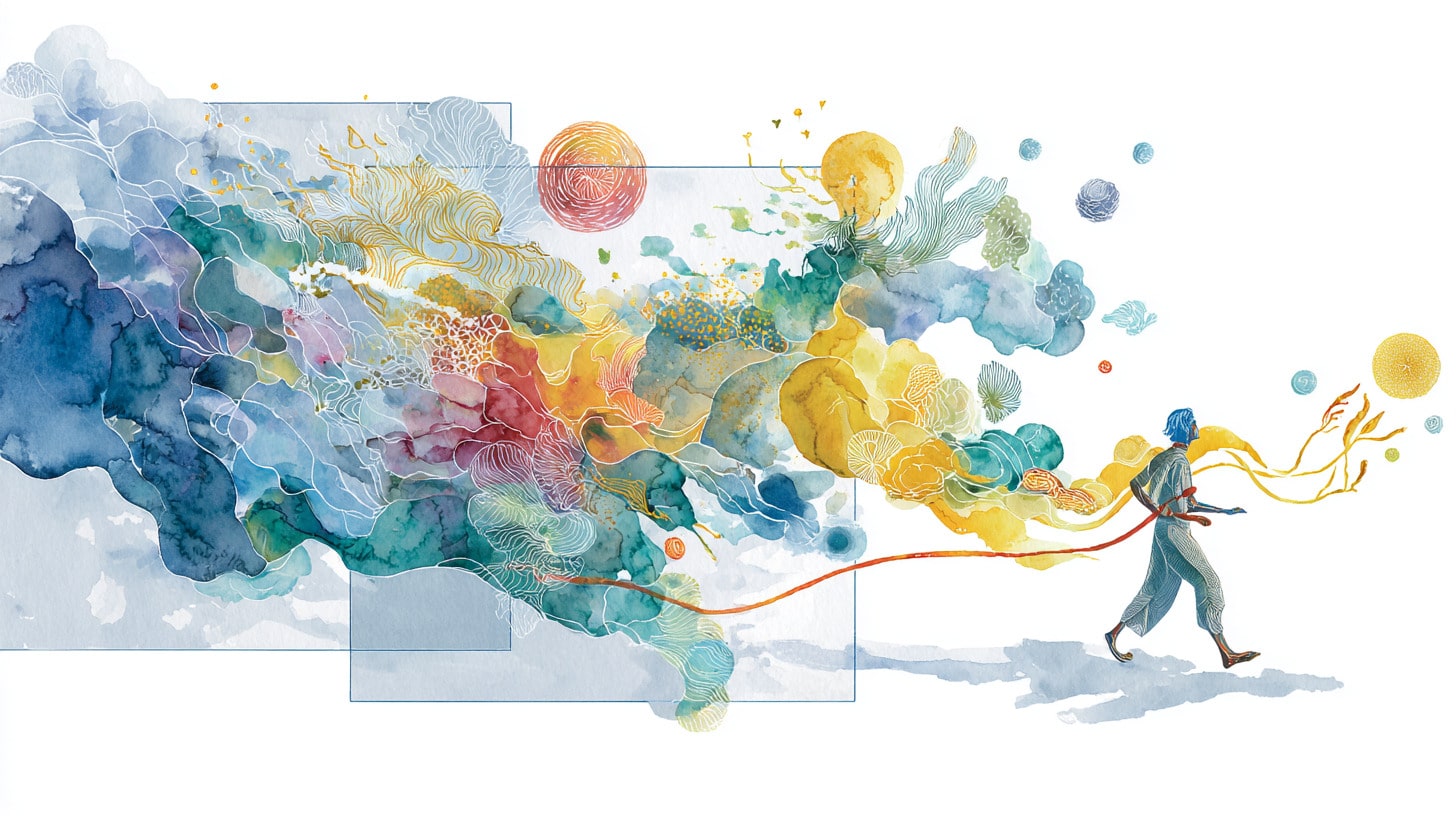
A muscle growing stronger through use—imagination is built, not inherited

The creative muscle responds like any other: neglect weakens it, practice strengthens it. Your imagination is still there, waiting to be used.

Fear Kills It

But here's the catch.

Most of your ideas will be bad. That's not failure; that's the process. You need a lot of bad ideas to get to the good ones. And if you're paralyzed by fear — fear of rejection, fear of being wrong, fear that people will think your idea is stupid — you'll never produce enough volume for the gems to emerge.

Fear is the imagination killer. Every time.

So What Do We Do?

If you've felt boxed in — by your job, your education, or your own habits of mind — know this: the box isn't permanent. The muscle is still there, waiting.

Start small. Generate ideas without judging them. Ask questions that have no obvious answer. Collaborate with someone who thinks completely differently than you. Use AI not to think for you, but to think with you.

Planting Seeds

The kids at AI Lemonade Stand taught me something important.

When imagination leads and technology follows, remarkable things happen. When it's the other way around, you get exactly what the algorithm predicts.

This was never about launching a business or starting a movement. It was about showing up as a parent, as a human being, and trying to give our kids something the algorithms won't — the tools to stay human.

When I think about Nico growing up in a world where AI is everywhere, I don't worry about whether he'll know how to use it. He will. I worry about whether he'll still trust his own ideas enough to start before asking a machine.

That's the muscle I'm trying to protect.

And honestly? I'm still relearning how to use it myself.

Picks for you

How Our Fictions Shape Our World

How Our Fictions Shape Our World

Human beings do not live only in physical reality; we live inside stories, and those stories often shape our behavior more powerfully than facts or nature itself. Money, nations, laws, identities, and political movements exist because we collectively believe in shared fictions, and once those fictions become tied to belonging and identity, people defend them fiercely, sometimes more fiercely than their own long-term survival. Politics, in particular, operates as storytelling at scale, competing narratives that simplify complexity, assign heroes and enemies, and offer emotional clarity faster than truth ever can. This is not because people are irrational, but because humans are meaning-driven creatures who cooperate through shared myths. The danger appears when we forget that these stories are human-made. When stories harden into unquestionable reality, they become cages that block nuance, empathy, and learning. Storytelling itself is not the problem; it is one of our greatest human capacities. The real skill today is story awareness, the ability to recognize which narratives we are living inside, who benefits from them, and what they leave out. Holding stories lightly allows conviction without fanaticism, belonging without hostility, and meaning without blindness. In a world where narratives now spread at machine speed, wisdom lies not only in telling better stories, but in remembering that they are stories at all.

Read more
The Ministry of Meaning Storytelling Framework cover

The Ministry of Meaning Storytelling Framework

This framework turns Joseph Campbell’s Hero’s Journey into a practical guide for modern communication. It begins with the “Call to Adventure”: the moment you feel your words fail to land. At first you resist, believing storytelling belongs to others, until the Ministry of Meaning steps in as a mentor, giving you four core skills: imagination, storytelling, critical thinking, and empathy. You cross the threshold when you choose to use words with intention. Then come the trials: learning to imagine originally, shape ideas like stories, and connect them to human emotion. Along the way you meet your “inner audience,” realizing every sentence creates a world for someone. You face temptations, clichés, buzzwords, and confront your inner critic. Through this, you transform, seeing storytelling as precision rather than performance. Finally, you claim the MoM storytelling framework: name the moment, show the tension, reveal the insight, offer a path, and return with meaning. You bring this “treasure” into your work, parenting, relationships, and content; becoming someone who brings clarity into noisy spaces and navigates both the modern world and the human one with depth, presence, and intention.

Read more
Change The Story Change The World

Change the Story, Change the World

Revolutions often look dramatic in history books, but most real change begins quietly, in living rooms, private conversations, and small shifts in the stories people tell about themselves. The feminist revolution is a prime example: it didn’t start with violence, but with women questioning the old script of what a woman “should” be and sharing new stories that slowly rewrote society’s invisible code. Stories are the software of human life, shaping norms, expectations, and identities, and when they change, the “hardware” of laws, workplaces, and institutions follows. This same mechanism operates inside every person: we all live inside inherited stories about success, gender, worth, and identity. By noticing these stories, questioning who benefits from them, listening empathetically to others, imagining better ones, and telling small, honest stories of our own, we begin our own quiet revolutions. Big societal change grows from millions of these small narrative updates, gentle acts of imagination and truth that slowly teach the world a new way to be.

Read more
How Zohran Mamdani Rewrote Political Storytelling cover

How Zohran Mamdani Rewrote Political Storytelling

This essay argues that Zohran Mamdani succeeded not by mastering digital tricks but by telling a human, collective story in an era of robotic political messaging. While Cuomo relied on polished ads and credentials, Mamdani spoke in the language of “we,” grounding his campaign in real places—grocery aisles, buses, working-class streets—and making voters feel like co-authors rather than audiences. His policies became shared life-choices, his tone became neighbour-to-neighbour, and his storytelling dissolved the distance that usually defines politics. In a noisy world flooded with algorithmic content, the simplest authentic story wins: the one that says “this is us, together.”

Read more
The Whisper of a Single Stroke cover

The Whisper of a Single Stroke

This essay explores the power of simplicity through the metaphor of a single Sumi-e brushstroke, arguing that minimalism is not emptiness but pure intention. Across art, film, writing, and life, the unadorned line invites participation, sharpens clarity, and honors what’s left unsaid. Masters like Carver, Didion, Ozu, and Tarkovsky trusted silence and space, knowing that meaning often grows in what remains unspoken. The author shares a personal lesson from a Japanese ink-painting studio: when we stop overworking and allow space, honesty and life emerge. In an age overwhelmed by noise, the essay urges us to strip the excess from our communication, creativity, decisions, and relationships, finding strength in restraint and letting our truth rise from the quiet between strokes.

Read more
The Story That Heals cover

Storytelling Is One of the Core Human Skills We Need

This essay argues that storytelling is not decoration but a core human skill that shapes how we understand others, influence the world, and make sense of our own lives. Through the example of an elderly woman whose medical complaint was actually a story of lost connection, the essay shows that humans communicate in meaning, not data. Storytelling is our oldest technology, the bridge between emotion and understanding, the force that syncs minds and creates empathy. It explains why leaders move people with narratives, why our self-stories shape our identity, and why healing often begins with being heard. In an age of noise and information overload, the ability to craft, decode, and rewrite stories is essential — not just for influence but for personal freedom. The essay invites readers to stop outsourcing their narrative, become conscious authors of their inner and outer stories, and recognize that the story they tell about themselves will shape the life they ultimately live.

Read more
The Wind Behind His Sails cover

The Wind Behind His Sails Wasn’t the Ocean; It Was a Story

This essay uses Columbus’s 1492 voyage as a lens to show that what truly moves people is not maps, data, or talent, but story. Columbus was wrong about the size of the Earth and far from the best navigator of his time, yet he held his crew together across an empty horizon by turning fear into destiny and hardship into a shared myth, even falsifying the ship’s log to protect morale. The piece explores the double edge of narrative; the same story that unites a crew can justify conquest and harm, which means anyone using story today has an ethical duty to build in brakes: humility, feedback, and a willingness to redraw the map when reality disagrees. For modern builders and “escape artists” leaving old careers or systems, storytelling becomes architecture rather than make-believe: naming a clear horizon, disclosing uncertainty, installing feedback loops, and crafting a plot that can survive shocks. In a world entering new oceans like AI and climate crisis, the essay argues that stories are how we organize risk and recruit courage; the wind behind any meaningful voyage is the narrative we live by, and the real work is to sail with both ambition and responsibility, then update the story honestly when we make landfall.

Read more

Comments

Sign in to join the discussion.
Loading…