
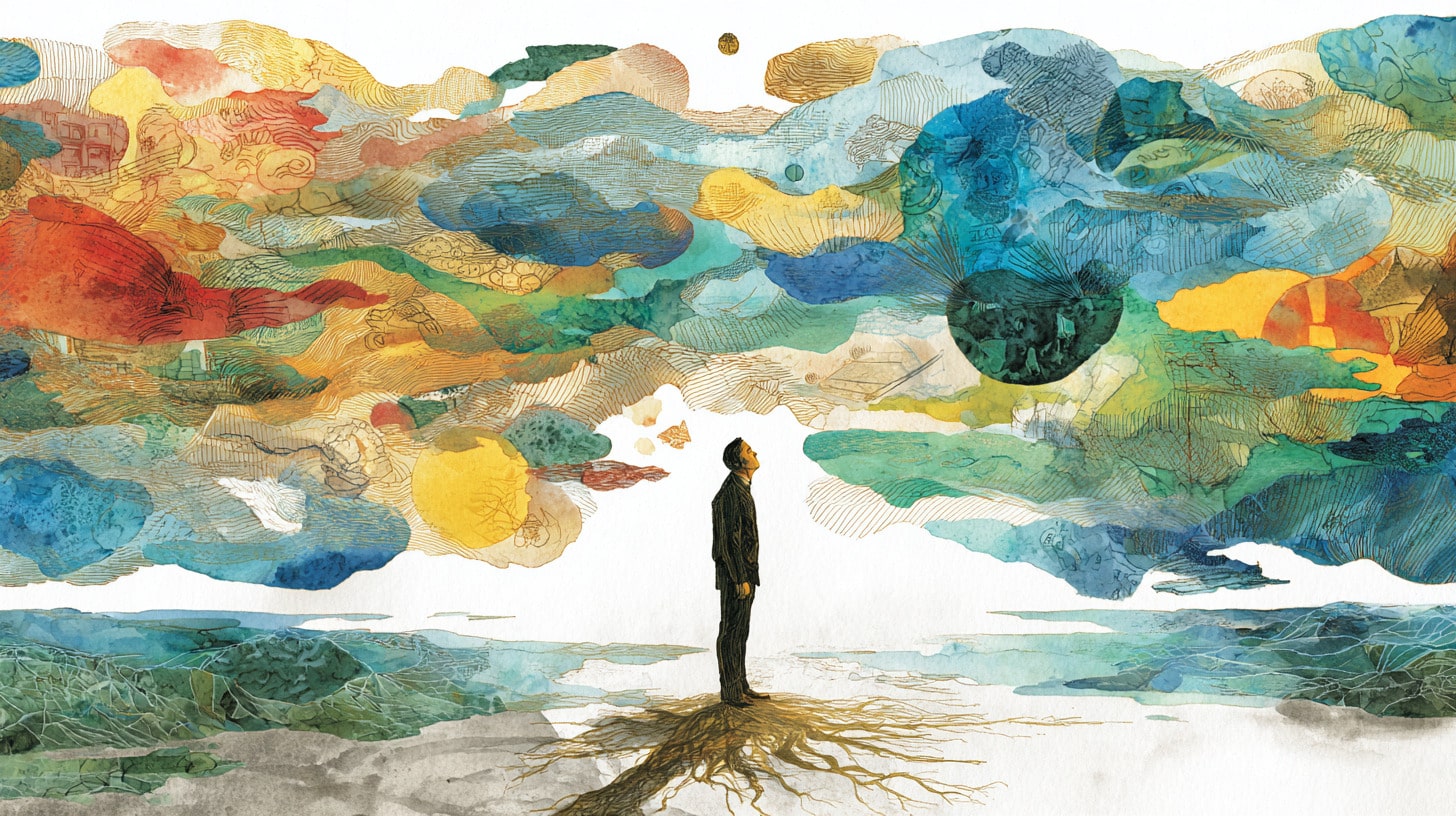

The Stories We Live Inside
Storytelling is one of those quiet human skills that most people underestimate. We often think of stories as something that belongs in books, movies, or childhood memories. But storytelling does not live only in fiction sections or cinema halls. It lives in our daily lives, in the things we believe, follow, defend, and argue about.
When we talk about storytelling, we are really talking about how humans make sense of the world. We create stories to explain where we came from, who we are, and where we are going. These stories guide our decisions, our fears, and our hopes.
Sometimes, these stories become more powerful than the physical world itself.
That may sound strange at first. After all, stones are real. Trees are real. Animals are real. But stories shape how we interact with all of them.
A Layered Reality
Think about it this way.
For thousands of years, humans have lived in a layered reality.
At the base level, there is physical reality. Trees grow. Rivers flow. Animals eat, sleep, and die. Stones remain stones whether we look at them or not.
But on top of this physical reality, humans have built another layer. A shared mental layer. A world of stories.
This is where money exists. Nations exist. Laws exist. Religions exist. Companies exist. None of these things are physical in the same way a rock is physical. You cannot touch a nation. You cannot smell money. You cannot see a corporation walking down the street.
And yet, these invisible things shape our lives more than most physical objects ever will.
They exist because we all agree that they exist.
Why We Protect Stories More Than Nature
What is truly fascinating is how strongly people protect these shared stories.
If a natural wonder like a coral reef is slowly dying, the reaction is often quiet. The damage happens over years. The cause is complex. Responsibility is spread across systems, habits, and industries.
But if a famous building, a monument, or a sacred site is threatened, emotions explode. Anger rises fast. Protests form. Violence sometimes follows.
What does that tell us?
It tells us that humans often care more about shared meaning than shared survival.
We protect what represents us. We fight for symbols. We rally around stories that define identity.
Nature feels distant. Stories feel personal.
This does not mean people are evil or careless. It means humans are meaning-driven creatures. We respond to narratives more strongly than to slow, complex realities.
That is the raw power of storytelling.
Where Politics Enters the Story
This is where politics quietly steps in.
Politics is not just about policies, systems, or numbers. Politics is storytelling at scale.
Every political system rests on a shared story. A story about who belongs. A story about who leads. A story about what is fair, what is dangerous, and what must be protected.
Borders are stories. Citizenship is a story. National identity is a story.
These stories are powerful because they give people a sense of belonging. They create an "us." And once there is an "us," there is almost always a "them."
Politics becomes a competition between stories. Not between truths alone.
Truth is often slow. It is layered. It comes with uncertainty and trade-offs. Political stories are fast. They simplify. They point to heroes and enemies. They give people emotional clarity.
That is why, politically, fiction often wins over truth.
Not because people are foolish, but because stories speak to fear, pride, and identity faster than facts ever can.
Painful Truths and Comfortable Stories
Truth has a problem in politics.
It is often painful.
Truth says problems are complex. It says responsibility is shared. It says change requires sacrifice. It says there is no simple villain.
Stories say something else.
Stories say someone is to blame. Stories say salvation is close. Stories say suffering has meaning.
When people feel lost or threatened, they reach for stories that make the world feel understandable again.
This is why political movements throughout history have relied less on accuracy and more on emotional resonance. The story does not need to be fully true. It needs to feel true.
As historian Yuval Noah Harari explains, humans can cooperate in large numbers because they believe in shared myths. These myths allow millions of strangers to act together as if they are one body.
This ability built civilizations.
It also fueled wars.
Living in Political Virtual Reality
Most people do not experience politics through direct reality. They experience it through stories.
Through speeches. Through headlines. Through symbols. Through emotional language.
Two people can look at the same event and feel like they are living in completely different worlds. Not because reality changed, but because the story framing it is different.
This is a form of virtual reality. Not digital, but psychological.
People are not reacting to raw events. They are reacting to narratives about those events.
That is why political debates often feel impossible. People are not arguing facts. They are defending the stories that give their lives meaning.
Once a story becomes tied to identity, questioning it feels like an attack on the self.
This is when storytelling stops being a tool and starts becoming a cage.
Storytelling as a Human Superpower
And yet, storytelling itself is not the enemy.
Storytelling is one of the core human skills that allowed us to build cooperation, pass down wisdom, and imagine futures that did not yet exist.
Without storytelling, there would be no science, no culture, no shared goals.
The danger is not that we tell stories. The danger is forgetting that we are telling them.
When stories are seen as absolute reality, they become rigid. Sacred. Untouchable.
When stories are seen as human creations, they become flexible tools. They can evolve. They can be questioned. They can be improved.
This awareness is a form of maturity.
The Personal Layer of Storytelling
This does not apply only to politics or nations. It applies to individuals too.
Every person lives inside a personal story. A story about who they are. A story about what they deserve. A story about what is possible for them.
Some people live inside stories of limitation. Others live inside stories of growth. Many never realize they are living inside a story at all.
When you change the story you tell about yourself, your behavior changes. Your choices change. Your future changes.
That is how powerful storytelling is. It shapes not only societies, but inner worlds.
Learning to Hold Stories Lightly
So what do we do with this knowledge?
We do not reject stories. We learn to hold them lightly.
We learn to ask simple questions:
- What story am I believing right now?
- Who benefits if I believe it?
- What part of reality might this story be hiding?
This does not make life colder. It makes it clearer.
It allows empathy without blindness. Conviction without fanaticism. Belonging without hostility.
It allows us to participate in shared stories without being owned by them.
Why This Skill Matters Now
We live in a time where stories spread faster than ever.
Technology has amplified storytelling beyond anything humans have known before. A single narrative can reach millions in seconds. Emotional stories travel faster than careful truths.
That makes storytelling literacy essential.
Not just the ability to tell stories, but the ability to recognize them.
- To see when a story is guiding us toward cooperation.
- And when it is guiding us toward division.
This is not a political stance. It is a human skill.
A Closing Reflection
In the end, storytelling is not just a soft skill.
It is one of the forces that shapes reality itself.
We live in a world built on shared fictions layered on top of physical truth. These fictions create meaning, order, and identity. They also create conflict, blindness, and suffering.
The difference lies in awareness.
When we remember that stories are human-made, we gain freedom. When we forget, we become servants to them.
The future will not be shaped by facts alone. It will be shaped by the stories people choose to believe.
Learning to tell better stories matters. Learning to see through them matters even more.
That balance is where wisdom begins.


