

When we hear the word "revolution", most of us see the same movie in our minds. Crowds in the streets. Flags in the air. Soldiers. Shouting. Maybe even blood.
Now imagine a different scene.
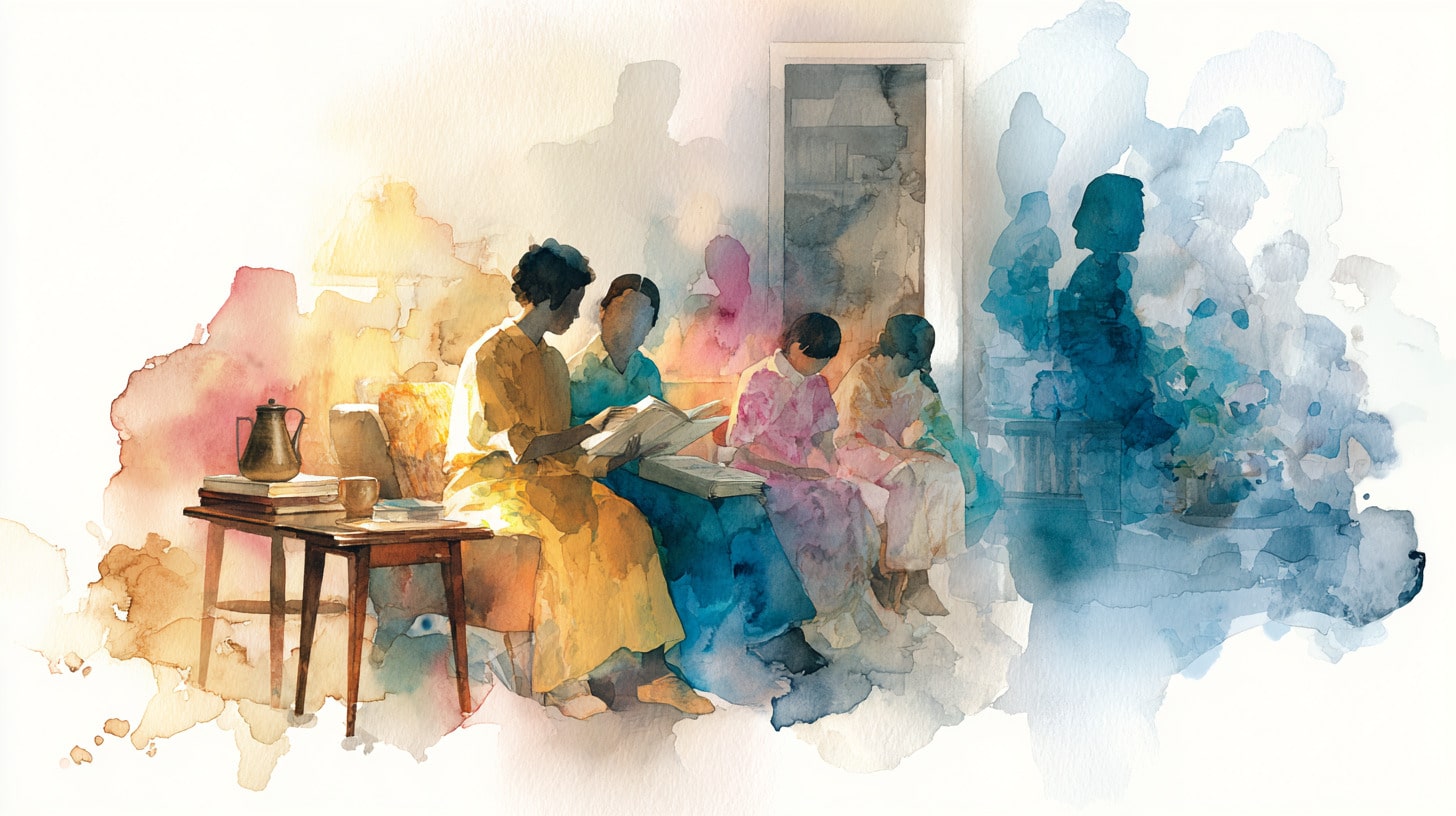
A small living room in the 1960s. A few women sit together. There is coffee on the table. There are children in the next room. Someone has brought a book that puts their quiet frustrations into clear words. They read. They talk. They say things they were never supposed to say out loud.
No guns. No generals. No barricades.
Yet that quiet scene is part of a revolution that changed the lives of hundreds of millions of people.
Yuval Noah Harari has a simple way to describe what happened. He says that human beings can change the world "just by changing the story." The feminist revolution is one of his favorite examples of this kind of change. A huge shift in how society treats women, with very little violence.
So how does that work in real life? How can a story be strong enough to move a whole world?
Let us walk through it together.
The invisible code that runs our world
Human beings do not live only in a world of facts. We also live in a world of stories.
We have passports, but the passport is just paper. We have money, but the money is just metal, plastic, or numbers in a bank system. We treat these things as extremely important because of the shared stories that sit behind them, stories about nations, value, trust, and borders.
You can think of it like a giant computer.
The buildings, roads, machines, and documents are the hardware. The stories we share about them are the software. When you update the software, the same hardware starts to behave in new ways.
Society works like that. The laws, schools, companies, and customs are the hardware. The beliefs we repeat together are the software. Some of those beliefs are written down in books and rules. Many are just "the way things are" that no one even questions.
For a long time, one of the strongest stories on earth was the story of what a woman is supposed to be.
In many places, the story went something like this. A good girl grows up to be a good wife and then a good mother. Her center of gravity is the home. She cares, supports, obeys. She puts other lives before her own. If she has a job, it comes second. If she has dreams, they fit in the small spaces left between chores.
This story lived in millions of minds at once. It shaped laws, job offers, wedding speeches, jokes, schoolbooks, and dinner conversations. It was like a pair of glasses that everyone wore from childhood. After a while you forget there is glass in front of your eyes. You think the world simply looks like that.
This is the quiet power of a story. It defines what seems normal. It tells us who is allowed to want what. It whispers what we can expect from life.
So what happens when that story is challenged, slowly, from the inside?
The feminist revolution as a change of story
The feminist revolution did not begin with a battle. It began with questions.
Women started asking, often first in private, "Why is my work at home unpaid and invisible? Why is my opinion always secondary? Why must my dreams be small and polite?"
Books appeared that put these questions into sharp language. Articles, essays, and conversations named the parts of life that had no name before. Words like "glass ceiling" and "sexual harassment" and "second sex" appeared and then spread. Once something has a name, it becomes harder to ignore.
Think of an old play where every woman is given the same role. The play has been performed for centuries. Most of the audience believes this is simply how the story goes. Then, one day, an actress decides to improvise. She steps out of the usual lines. At first everyone is shocked. Then one person in the audience thinks, "She makes more sense than the script."
This is how new stories are born.
The feminist story said very simple things.
- A woman is a full human being, not a supporting character.
- Her work, inside and outside the home, has real value.
- Her body, time, and choices belong to her.
- She can be a scientist, a leader, a parent, or none of these.
These ideas spread through living rooms, classrooms, churches, offices, and streets. They spread through novels, films, songs, and television. People saw women in new kinds of roles: doctors, pilots, heads of companies, prime ministers. Children grew up with pictures of what was possible that their grandparents never saw.
Laws changed. Workplaces changed. Schools changed. Family rules changed.
Yet this revolution did not look like a classic war. There were protests, and sometimes violence and backlash. Still, there was no armed army of women marching to conquer territory. The main weapon was a story that refused to stay small and quiet.
This pattern is not unique.
Think of smoking in public places. For years the story around smoking said that it was cool, grown up, even glamorous. Over time, another story rose. Smoking damages not only your own lungs, but also the health of people around you. Now when someone lights a cigarette in a crowded room, many people feel annoyed or unsafe. The same action carries a different meaning because the story changed.
Think of seat belts and drunk driving. In many cultures, there used to be pride in risk. A "real man" drove fast, took chances, laughed at rules. Then the story shifted. Risking your life and the lives of others began to look irresponsible instead of brave. Campaigns and laws helped, but they worked because the deeper story in people’s minds was changing.
Stories shape the deep code that tells us what to fear, what to admire, and what to expect from ourselves.
The feminist revolution needed four quiet human powers to do its work: imagination to picture a different life, storytelling to share that picture, critical thinking to question the old script, and empathy to feel the real weight of other people’s lives.
These are the same four skills each of us needs if we want to change our own corner of the world.
Becoming a conscious story architect
All of this can sound very big and distant. Nations, movements, revolutions. But the same logic is at work inside your own life, every single day.
You and I also live inside stories.
There is a story your family told you about success. There is a story your culture tells you about what a "real man" or a "good woman" should be. There is a story your workplace tells you about worth and productivity. There is a story you tell yourself about your own value.
Some of these stories are kind, helpful, and true enough. Others are heavy and cruel. Some are simply too small for the person you are becoming.
The first step is to notice them.
You can ask yourself:
- What did I learn, as a child, about what I am allowed to want?
- What did I learn about rest? About failure? About asking for help?
- Whose voice do I still hear in my head when I make a choice?
Think of these inherited stories like apps that came pre-installed on a new phone. You did not choose them. They may be useful, or they may drain your battery in the background. You have the right to open each one and decide if you still want it.
Here, critical thinking is your friend. Not dry, cold analysis, but gentle and honest questioning. For any story you notice, you can ask:
- Who benefits if I keep believing this?
- What in my real experience supports it, and what contradicts it?
- What happens to my body when I repeat this story? Do I feel small, tight, scared? Or open, strong, steady?
At the same time, you can practice empathy. Try visiting the world of another person. Listen to someone who grew up with a very different story about gender, work, or love. Do the simple "fair summary" test. Can you describe their view in a way that they would accept as fair, even if you disagree?
This kind of listening does not mean you must agree with everything. It just means you are seeing people as full humans, not as walking symbols. New stories are more powerful when they are built on understanding instead of contempt.
Then comes imagination.
Imagination is often seen as escape, but it is also a basic survival skill. Before something can exist in the outer world, it usually has to exist in the inner world first, as a picture or a feeling.
You can sit quietly for a few minutes and ask:
- What would a more truthful story of my life look like?
- What would it look like if my work and my care for others could both matter?
- What would a kinder story about my body sound like?
Imagination is like a rehearsal. When you live a better story in your mind, even for a moment, it becomes slightly easier to live it for real.
Finally, there is storytelling itself.
You do not need to be a writer or a speaker. Every simple sentence you say can carry a story into the shared space between people.
You can pay attention to the way you talk about your own mistakes. Do you say, "I always fail," or do you say, "I am learning"? You can listen to how you speak about other groups, other genders, other beliefs. Are your words closing doors or opening them? You can notice the stories you tell children around you. Do you limit them, or do you help them see many paths?
Each small story is like a tiny software update you send into the network of human minds around you. One update does not change everything. Thousands begin to.
If you like, you can even build small rituals around this.
At the end of the day, write one sentence that starts with, "Today I lived the story that..." and complete it honestly. Once a week, choose one belief you hold and ask where it came from. Once a month, tell someone a story from your life that shows both your struggle and your growth, without hiding the hard parts.
These simple practices keep you awake. You stop living entirely on autopilot. You begin to see how the stories move through you.
Your quiet revolution
The feminist revolution shows that you do not always need guns to change reality. You need enough people who are willing to tell a different story about what a human is allowed to be. Once that story takes root, laws, customs, and institutions start to move, sometimes slowly, sometimes faster than anyone expected.
The same principle is working in your own life.
You may never write a law or lead a protest. That is fine. You are still a part of the larger human story. The way you speak to your children, your colleagues, your partner, and yourself, all of that feeds into the shared picture of what is normal and possible.
History loves the loud moments. The big speeches. The turning points.
But most revolutions begin in smaller places. A living room. A quiet walk. A sentence that feels more kind and more true than the one it replaces.
That is the power you carry, right now, in the stories you choose to believe and the stories you dare to tell.


