

There’s a quiet misunderstanding running through our culture today—a dangerous one. We’ve started to confuse empathy with agreement. Somewhere between hashtags, debates, and flame wars, people began to believe that understanding another perspective means you must endorse it.
But that’s not empathy. That’s surrender.
True empathy is a kind of emotional aikido: you step into another person’s field, observe, connect—without losing balance. You visit their world, understand it, then step back into your own center, wiser than before.
We live in a time when disagreement feels like betrayal. Yet the ability to hold empathy and conviction at the same time is a hallmark of maturity. Empathy is not saying, “You’re right.” It’s saying, “I see how you arrived there.”
1) The Courage to Listen
Most people don’t listen to understand—they listen to reply.
Empathy begins when you stop playing ping-pong with opinions.
Listening well means suspending the urge to defend your worldview, choosing curiosity over certainty. Paradoxically, empathy doesn’t weaken convictions—it tests and tempers them, the way fire strengthens steel.
2) The Fair-Summary Test
Before you criticize an idea, state their view so clearly that they could say, “Yes—that’s exactly what I mean.”
That’s empathy in action, not moral weakness—intellectual honesty.
Why it matters: our brains love straw men. But when you articulate the best version of someone’s argument, you see the human behind it. You may still disagree—often more precisely—but now you’re engaging truth, not caricature.
In global leadership settings, I’ve watched rooms shift when teammates restate each other’s points first. Ego drops. Clarity rises. Collaboration begins.
3) Boundaries of the Heart and Mind
Understanding another person’s truth doesn’t mean abandoning your own.
Empathy without boundaries becomes absorption—compassion confused with self-erasure.
Your heart can be open without being porous.
Empathy is like scuba diving: explore another’s depths—but always come back up for air.
Boundaries don’t block empathy; they sustain it. They let you care deeply without drowning.
Empathy in the Age of Outrage
Today empathy is either weaponized as branding or mocked as weakness. Both are distortions.
At its best, empathy is cognitive bravery—emotional jiu-jitsu in a black-and-white world.
It takes courage to say “Tell me more” when you want to say “You’re wrong.”
It takes discipline to stay open when a conversation threatens your identity.
Stay with it and you’ll discover: most humans aren’t villains—just narrators from different angles. That realization isn’t naïveté. It’s wisdom.
Empathy as a Discipline
Practice empathy without surrender:
- Pause before reacting. When triggered, ask: What story are they living that makes this belief make sense?
- Summarize their view. Use the Fair-Summary Test: “Let me make sure I understand you…”
- Anchor in your values. Clarify your boundaries; know what you will and won’t compromise.
- Seek complexity. Avoid one-dimensional judgments; the world isn’t heroes vs. villains—it's humans in progress.
- Stay curious. Empathy thrives in curiosity; certainty kills it.
Practicing empathy won’t make you agree more. It will make you understand more—and that makes you harder to manipulate, harder to divide, and easier to trust.
Empathy and the Expansion of Consciousness
Deep empathy expands awareness. Step into another’s world without losing your footing, and your perspective stretches beyond the ego’s walls. Truth is often not a single peak but a range of perspectives seen from different altitudes.
Empathy isn’t about being “nice.” It’s about being awake.
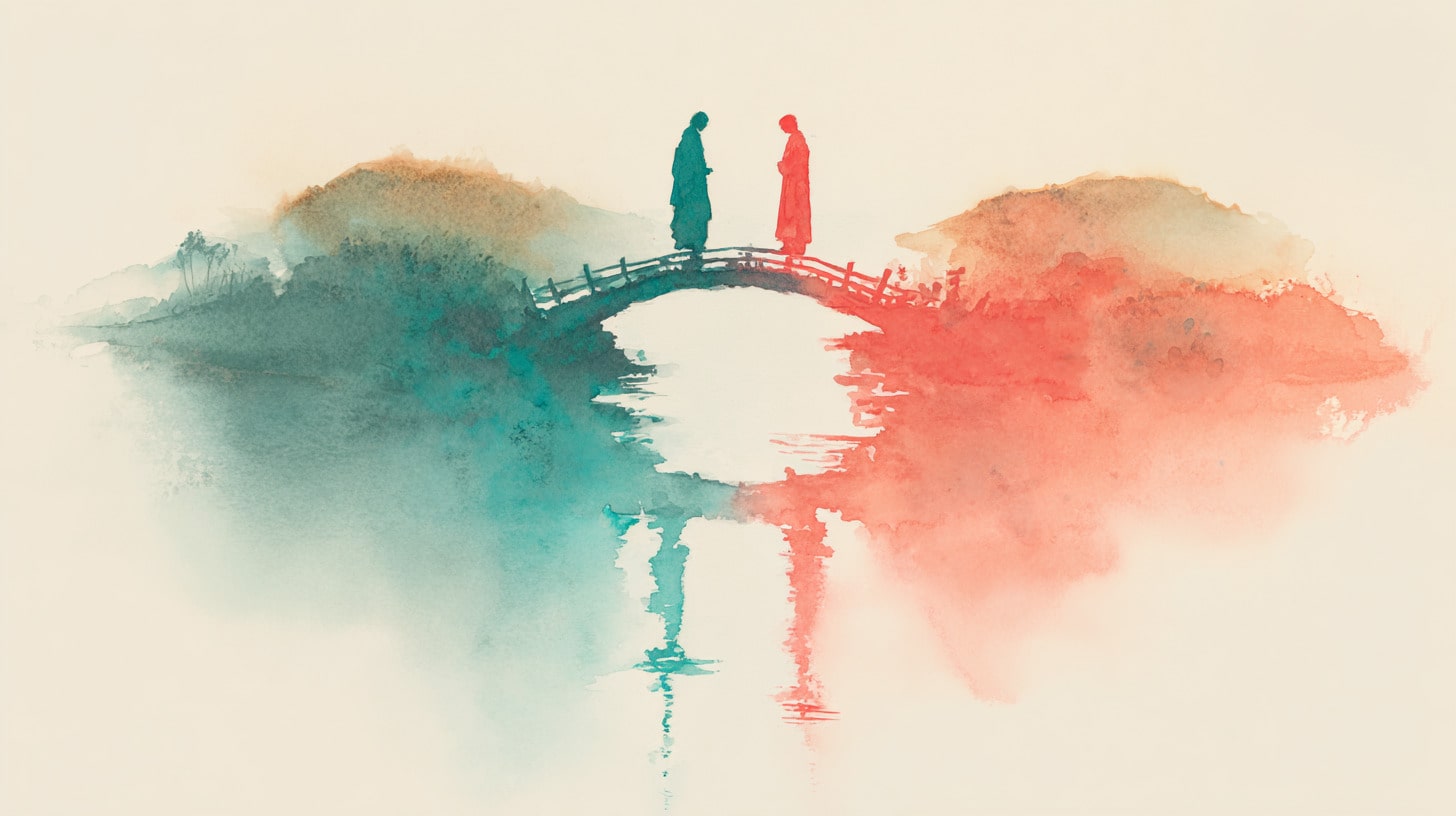
The Bridge to Understanding
Empathy is a bridge. Cross it without surrendering yourself and you grow beyond compassion—into consciousness.
The world doesn’t need more mountaintop shouts. It needs more people willing to climb down, walk across the bridge, and say, “Show me your view.”
That’s where real human progress begins.


